In recent developments within the gaming hardware industry, both AMD and Nvidia have introduced new products and strategic partnerships, signaling a dynamic shift in the market.
AMD has reportedly been developing two next-generation GPUs under the architecture tentatively called RDNA 5 or UDNA. The first, codenamed AT0, is a high-end chip designed for both AI workloads and gaming, featuring 154 compute units, a 384-bit memory bus, and 36 GB of GDDR7 memory. This GPU is expected to rival Nvidia’s future RTX 6090. The second, AT2, is a more mainstream GPU with 64 upgraded compute units, aiming to match the performance of Nvidia’s RTX 5080 while targeting a significantly lower $550 price point. This GPU could also be integrated into future high-performance APUs or gaming consoles like Xbox. Despite the exciting prospects, these GPUs are not expected to launch until early 2027, aligning with AMD's typical two-year release cadence.
In the CPU market, AMD has achieved a notable milestone by surpassing a 40% share in the Steam hardware survey as of July 2025, marking significant growth from just 23% five years earlier. This rise is largely attributed to the popularity of AMD’s high-performance 3D V-Cache CPUs, such as the Ryzen 7 9800X3D. Meanwhile, Intel’s share has dropped to below 60% from a previous 77%, indicating a sustained shift in market dynamics.
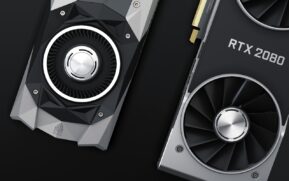
On the GPU front, Nvidia continues to dominate with a 73.94% share of discrete graphics cards. The new mid-range RTX 5070 has become the most popular model in Nvidia’s Blackwell-based RTX 50 series, showing the biggest monthly growth at 1.32%. AMD's new Radeon 9000-series has yet to break into the chart, indicating slow adoption or limited supply.
In the handheld gaming sector, Lenovo has announced the Legion Go 2, a successor to its original Legion Go. The device adopts a Nintendo Switch-like design but runs Windows 11, featuring detachable controllers, a built-in kickstand, and a trackpad for versatile gameplay. While no official release date has been confirmed, leaks from Lenovo Latin America hint at a September 2025 launch. The device is expected to come in two configurations, including one with an AMD Ryzen Z2 Extreme and another with the Z2 non-Extreme chip. Confirmed prototype specs include a Radeon 780M GPU, 32GB RAM, up to 2TB NVMe SSD, an 8.8-inch OLED panel with a 144Hz refresh rate, and a 74–75Wh battery. Pricing is rumored to start near $1,000 for the high-end model, making it a competitor to other 2025 handhelds like the Xbox Ally X and MSI Claw A8.
Additionally, Microsoft and Asus have collaborated to develop the ROG Xbox Ally and ROG Xbox Ally X, two upcoming gaming handhelds set for a Holiday 2025 release. These devices feature two new AMD chips: the Ryzen Z2 A and the more powerful Ryzen AI Z2 Extreme, promising strong performance for AAA gaming at 1080p 60 FPS. The Ally X boasts a higher spec with 24GB RAM, 1TB SSD, and an 80Wh battery, while the base Ally has 16GB RAM, 512GB SSD, and a 60Wh battery. Both have 7-inch 1080p IPS displays with 120Hz refresh rates and modern connectivity options. The software side sees a major overhaul with a new Xbox UI that disables Windows 11 desktop processes to save RAM and improve usability. Prices are expected at $599 for the Ally and $899 for the Ally X, with pre-orders likely starting at Gamescom on August 20, 2025.
These developments highlight the competitive and rapidly evolving nature of the gaming hardware industry, with major players like AMD, Nvidia, Microsoft, and Lenovo introducing innovative products and strategic partnerships to meet the growing demands of gamers worldwide.
77 People Are Viewing This News Right Now